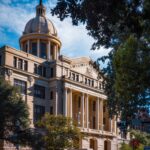

Photo: Giammarco Boscaro / Unsplash. License: Unsplash License.
Quick Answer: The State Bar of Texas counted 118,430 active attorneys as of December 31, 2025, up 20% from 98,671 in 2015, and 101,162 of them practice in Texas. The median income reported by full-time Texas attorneys for 2025 was $164,705, up 15% from 2023, with a median hourly rate of $368, according to the bar’s Department of Research and Analysis.
The State Bar of Texas publishes a set of statistical reports each year that, read together, amount to a census of the Texas legal profession. The 2025-26 editions profile active members as of December 31, 2025, map where they practice, describe the newest class of licensees and, through a survey fielded in mid-2026, report what full-time attorneys earned in calendar year 2025. The picture is of a profession that is larger, older at the top, more diverse at the bottom, heavily concentrated in four metropolitan areas and better paid than it was two years ago.
How Many Lawyers Are There in Texas?
According to the State Bar of Texas Membership: Attorney Statistical Profile (2025-26), the number of active State Bar of Texas attorneys rose from 98,671 in 2015 to 118,430 in 2025, a 20% increase over ten years. Not all of those lawyers are in Texas. The bar’s attorney population density report puts active in-state attorneys at 101,162, up 15% from 87,957 in 2015, with another 16,851 active members based in other states and 417 outside the country.
The in-state count has grown more slowly than the state itself. The same report, using U.S. Census Bureau estimates, shows the Texas population rising 18% over the period, from 26,956,958 in 2015 to 31,709,821 in 2025. As a result, Texas had one active in-state attorney for every 313 residents in 2025, compared with one for every 306 residents in 2015.
What are the headline numbers?
| Measure | 2015 | 2025 | Change |
|---|---|---|---|
| All active State Bar attorneys | 98,671 | 118,430 | +20% |
| Active in-state attorneys | 87,957 | 101,162 | +15% |
| Active out-of-state attorneys | 10,415 | 16,851 | +62% |
| Active out-of-country attorneys | 299 | 417 | +39% |
| Texas population | 26,956,958 | 31,709,821 | +18% |
| Residents per in-state attorney | 306 | 313 | More residents per lawyer |
| New attorneys in the licensing class | 2,397 | 2,662 | +11% |
Source: State Bar of Texas Department of Research and Analysis, 2025-26 reports. Attorney counts are as of December 31 of each year.
Why is the out-of-state membership growing so fast?
The reports do not give a cause, but they document the trend from two directions. Out-of-state active members grew 62% in ten years, the largest percentage increase of any group the bar tracks. And among all active attorneys, 36% now hold a degree from an out-of-state or other law school, up from 29% in 2015. Among active in-state attorneys the share is 31%, up from 25%.
Where Do Texas Lawyers Practice?
The profession is concentrated to a striking degree. In 2025, 91% of active in-state attorneys were located in the ten largest metropolitan areas, and the four largest held 85%, according to the density report. Houston and Dallas-Fort Worth are nearly tied, and Austin has by far the most lawyers relative to its population.
| Metropolitan area | Active in-state attorneys | Share of in-state attorneys | Residents per attorney |
|---|---|---|---|
| Houston-Pasadena-The Woodlands | 32,395 | 32.02% | 244 |
| Dallas-Fort Worth-Arlington | 31,651 | 31.29% | 268 |
| Austin-Round Rock | 14,255 | 14.09% | 184 |
| San Antonio-New Braunfels | 7,912 | 7.82% | 356 |
| El Paso | 1,280 | 1.27% | 689 |
| McAllen-Edinburg-Mission | 1,145 | 1.13% | 805 |
| Corpus Christi | 1,002 | 0.99% | 450 |
| Lubbock | 869 | 0.86% | 422 |
| Waco | 767 | 0.76% | 403 |
| Beaumont-Port Arthur | 696 | 0.69% | 574 |
| Top ten combined | 91,972 | 90.92% | 273 |
Source: State Bar of Texas, 2025-2026 Attorney Population Density by Metropolitan Statistical Area. Attorneys as of December 31, 2025; population as of July 1, 2025.
At the county level the concentration is sharper still. Harris County had 25,911 active attorneys, Dallas County 17,719, Travis County 11,667, Bexar County 6,704, Tarrant County 5,986 and Collin County 4,289. Travis County had one attorney for every 119 residents and Dallas County one for every 150, the densest ratios among the large counties.
Which legal markets are growing fastest?
Among metropolitan areas, Austin-Round Rock-San Marcos added lawyers at the fastest rate, growing 21% from 11,781 to 14,255 attorneys between 2015 and 2025, although its population grew faster, at 31%. Waco grew 20%, from 638 to 767. Dallas-Fort Worth added the most lawyers in absolute terms, 4,798, an 18% gain, followed by Houston with 4,171, a 15% gain. San Antonio grew 17%, from 6,754 to 7,912.
Not every market grew. The bar’s figures show fewer active attorneys in 2025 than in 2015 in Odessa (down 21%, from 185 to 146), Victoria (down 14%), Beaumont-Port Arthur (down 12%, from 795 to 696), Texarkana (down 10%), Corpus Christi (down 8%), Wichita Falls (down 7%), Midland (down 5%) and Amarillo (down 3%). Non-metropolitan counties as a group gained 134 attorneys, to 3,551, a 4% increase.
How widespread are legal deserts in Texas?
The American Bar Association defines a legal desert as a county with more than 1,000 residents per attorney. By that measure, 111 of Texas’s 254 counties, or 44%, were legal deserts in 2025, and 3,443,904 people, 11% of the state’s population, lived in them, according to the State Bar. Another 50 counties were classed as underserved, with 751 to 1,000 residents per attorney. Only 16 counties were attorney-dense, meaning 250 or fewer residents per attorney.
Who Are Texas Lawyers?
The membership profile shows a bar that is slowly changing in composition. Among active in-state attorneys who reported the information, women made up 40% in 2025-26, up from 35% in 2015-16. White attorneys were 75% of in-state members, down from 80%; Hispanic or Latino attorneys were 12%, up from 9%; Black or African-American attorneys were 7%, up from 5%; and Asian or Pacific Islander attorneys were 4%, up from 3%. The bar notes that demographic data is self-reported and that not every attorney provides it.
Is the Texas bar getting older?
Yes, at the senior end. The median age of active in-state attorneys was 49 in 2025-26, compared with 48 a decade earlier, and the median time licensed was 20 years, up from 19. The larger shift is in the oldest bracket: 22,095 in-state attorneys, or 22%, were older than 65, compared with 13,479, or 15%, in 2015-16. Attorneys licensed more than 25 years were 40% of the in-state bar, up from 35%.
Where do Texas lawyers work?
Private practice remains the majority, but its share is edging down and its shape is changing. Of in-state attorneys who reported a primary occupation, 63% were private practitioners in 2025-26, compared with 65% in 2015-16. Solo practitioners fell from 24% to 21%, a decline of more than 2,600 lawyers, while attorneys in firms of more than 60 lawyers rose from 10% to 12%. Corporate and in-house counsel grew from 11% to 12%.
| Primary occupation (active in-state) | 2015-16 | 2025-26 |
|---|---|---|
| Solo practitioners | 17,894 (24%) | 15,228 (21%) |
| Firms of 2 to 5 attorneys | 11,905 (16%) | 11,036 (15%) |
| Firms of 6 to 24 attorneys | 7,939 (11%) | 7,626 (11%) |
| Firms of 25 to 60 attorneys | 2,957 (4%) | 3,151 (4%) |
| Firms of more than 60 attorneys | 7,689 (10%) | 8,645 (12%) |
| All private practitioners | 48,384 (65%) | 45,686 (63%) |
| Corporate or in-house counsel | 7,788 (11%) | 8,423 (12%) |
| Government attorneys | 7,491 (10%) | 7,279 (10%) |
| Full-time judges | 1,641 (2%) | 1,623 (2%) |
| Public interest lawyers | 741 (1%) | 1,141 (2%) |
Source: State Bar of Texas Membership: Attorney Statistical Profile (2025-26). Percentages are of the 74,129 in-state attorneys reporting an occupation in 2015-16 and the 72,017 reporting in 2025-26; the two combined firm-size rows are sums of the bar’s published brackets, with percentages recalculated.
Two other markers of professional engagement declined. Board-certified attorneys numbered 6,650 in-state, or 7% of the in-state bar, compared with 7,083, or 8%, ten years earlier. And 40% of in-state attorneys belonged to at least one State Bar section, down from 46%. The largest sections by in-state membership were Real Estate, Probate and Trust Law (8,723), Litigation (7,121), Family Law (5,233) and Corporate Counsel (4,487). The Oil, Gas and Energy Resources Law section counted 3,456 in-state members, down from 4,909 in 2015-16.
Which law schools supply the Texas bar?
Among active in-state attorneys, the University of Texas accounted for 13,694 (14%), South Texas for 11,469 (11%), the University of Houston for 9,645 (10%), SMU for 7,874 (8%), St. Mary’s for 7,434 (7%), Texas Tech for 6,630 (7%), Baylor for 5,783 (6%), Texas A&M for 3,916 (4%), Texas Southern for 3,306 (3%) and UNT Dallas for 545 (1%). Out-of-state and other law schools accounted for 30,866, or 31%.
What Does the Class of 2025 Look Like?
The bar’s Class of 2025 profile counts 2,662 new attorneys, 11% more than the 2,397 in the class of 2015, and the newest lawyers look different from the bar they are joining.
- Women were 54% of the class, compared with 46% of the class of 2015 and 40% of all active attorneys.
- Hispanic or Latino attorneys were 20% of the class, Black or African-American attorneys 12% and Asian or Pacific Islander attorneys 8%; white attorneys were 54%.
- The median age was 28.
- Graduates of out-of-state or other law schools were 46% of the class, up from 29% in 2015.
- Of the first-year attorneys reporting an occupation, 60% were in private practice, 26% were in firms of more than 60 attorneys, 17% were government attorneys and 7% were public interest lawyers. Four percent reported being unemployed and looking for work, compared with 6% in the class of 2015.
- Harris County was home to 701 members of the class (26%), Dallas County to 453 (17%), Travis County to 231 (9%), Bexar County to 165 (6%) and Tarrant County to 140 (5%); 201 (8%) were out of state.
Only 2% of first-year attorneys reporting an occupation were solo practitioners, compared with 5% in the class of 2015, which suggests the decline in solo practice across the bar is not being offset by new entrants.
How Much Do Texas Lawyers Earn?
The State Bar’s 2025 Income and Hourly Rate Report is based on a survey conducted from May 21 to June 30, 2026. The questionnaire went to 81,636 attorneys and 6,363 responded, a 7.8% response rate with a stated margin of error of plus or minus 1.2%. Income figures cover licensed, practicing full-time attorneys for calendar year 2025.
The median income for full-time Texas attorneys was $164,705, up $21,849, or 15%, from $142,856 in 2023. The median hourly rate for full-time private practitioners was $368, up $43. The bar describes those as the largest two-year gains since 2007. Fifty-five percent of respondents said their income rose in 2025, compared with 51% in 2023. The median bonus moved the other way, falling from $20,549 in 2023 to $18,905 in 2025.
| Years licensed | Median income 2023 | Median income 2025 | Change |
|---|---|---|---|
| 2 or fewer | $84,155 | $91,800 | +9.1% |
| 3 to 6 | $108,295 | $125,150 | +15.6% |
| 7 to 10 | $123,678 | $145,702 | +17.8% |
| 11 to 15 | $146,732 | $167,547 | +14.2% |
| 16 to 20 | $156,481 | $172,249 | +10.1% |
| 21 to 25 | $163,419 | $186,519 | +14.1% |
| More than 25 | $174,404 | $205,702 | +17.9% |
| All full-time attorneys | $142,856 | $164,705 | +15.3% |
Source: State Bar of Texas, 2025 Income and Hourly Rate Report.
Where is pay highest?
The two highest median incomes were reported in the Dallas-Fort Worth-Arlington area, at $181,009, and the Houston-Pasadena-The Woodlands area, at $173,586. Hourly rates were highest in the Austin-Round Rock area, with a median of $398, followed by Dallas-Fort Worth at $388 and Houston at $377.
How do pay and debt compare for new lawyers?
The report flags a squeeze at the entry level. Attorneys licensed two years or less reported a median income of $91,800 and median law school debt of $102,327, so debt exceeds a year of income for the typical new lawyer. That group also had the slowest income growth, 9.1%, and the lowest career satisfaction, 60%, of any experience group. Across all full-time attorneys, median law school debt was $93,128, career satisfaction was 73%, and 82% said they found their first full-time legal job within six months of being admitted.
Is there a gender pay gap?
Men reported a median income of $182,797 and women $150,661. Women reported the largest percentage increase of any demographic group between 2023 and 2025, 21.3%, from $124,164.
What Do the Numbers Mean for the Texas Legal Market?
Three threads run through the data. First, growth is uneven. The lawyer count is rising fastest among members outside Texas and in the large metros, while a string of smaller markets have fewer attorneys than a decade ago and 111 counties meet the definition of a legal desert. Second, the structure of practice is shifting away from the solo office and toward large firms and in-house departments, a pattern visible both across the whole bar and in the first jobs of the class of 2025. Third, the profession is aging at the top while its entry class is majority female and increasingly trained outside Texas, which points to a different-looking bar as the 22% of in-state attorneys who are older than 65 retire.
On pay, a 15% two-year rise in median income is substantial, but the survey also shows that the gains were smallest for the newest lawyers, whose median debt is larger than their median income.
Frequently Asked Questions
How many active attorneys are licensed in Texas?
The State Bar of Texas reported 118,430 active attorneys as of December 31, 2025, of whom 101,162 were in Texas.
What is the median income for a Texas attorney?
Full-time Texas attorneys responding to the State Bar’s survey reported a median income of $164,705 for 2025, up from $142,856 in 2023.
What is the median hourly rate for Texas lawyers?
The median hourly rate reported by full-time private practitioners for 2025 was $368. Medians were $398 in the Austin area, $388 in Dallas-Fort Worth and $377 in the Houston area.
Which Texas metro has the most lawyers?
The Houston-Pasadena-The Woodlands area had 32,395 active in-state attorneys at the end of 2025, narrowly ahead of Dallas-Fort Worth-Arlington with 31,651. Austin had the most lawyers per resident among the large metros, one for every 184 people.
How many Texas counties are legal deserts?
Using the American Bar Association definition of more than 1,000 residents per attorney, 111 of 254 Texas counties, or 44%, were legal deserts in 2025, according to the State Bar of Texas.
What share of Texas lawyers are women?
Women were 40% of active in-state attorneys in 2025-26, up from 35% in 2015-16, and 54% of the class of 2025.
Sources and Further Reading
- State Bar of Texas Membership: Attorney Statistical Profile (2025-26), State Bar of Texas Department of Research and Analysis
- 2025-2026 Attorney Population Density by Metropolitan Statistical Area, State Bar of Texas Department of Research and Analysis
- Class of 2025: Attorney Statistical Profile, State Bar of Texas Department of Research and Analysis
- 2025 Income and Hourly Rate Report, State Bar of Texas Department of Research and Analysis
- Demographic and Economic Trends research page, State Bar of Texas